


THE MANIC MECHANIC GUIDE

Maintenance explained.

Why the work matters, what to watch for and how to care for your car between visits to our Panaji workshop.

PRACTICAL CAR CARE

Good decisions start
with clear explanations.

These guides explain common maintenance needs in plain language. The correct interval or repair still depends on your vehicle, its service schedule and a proper inspection.

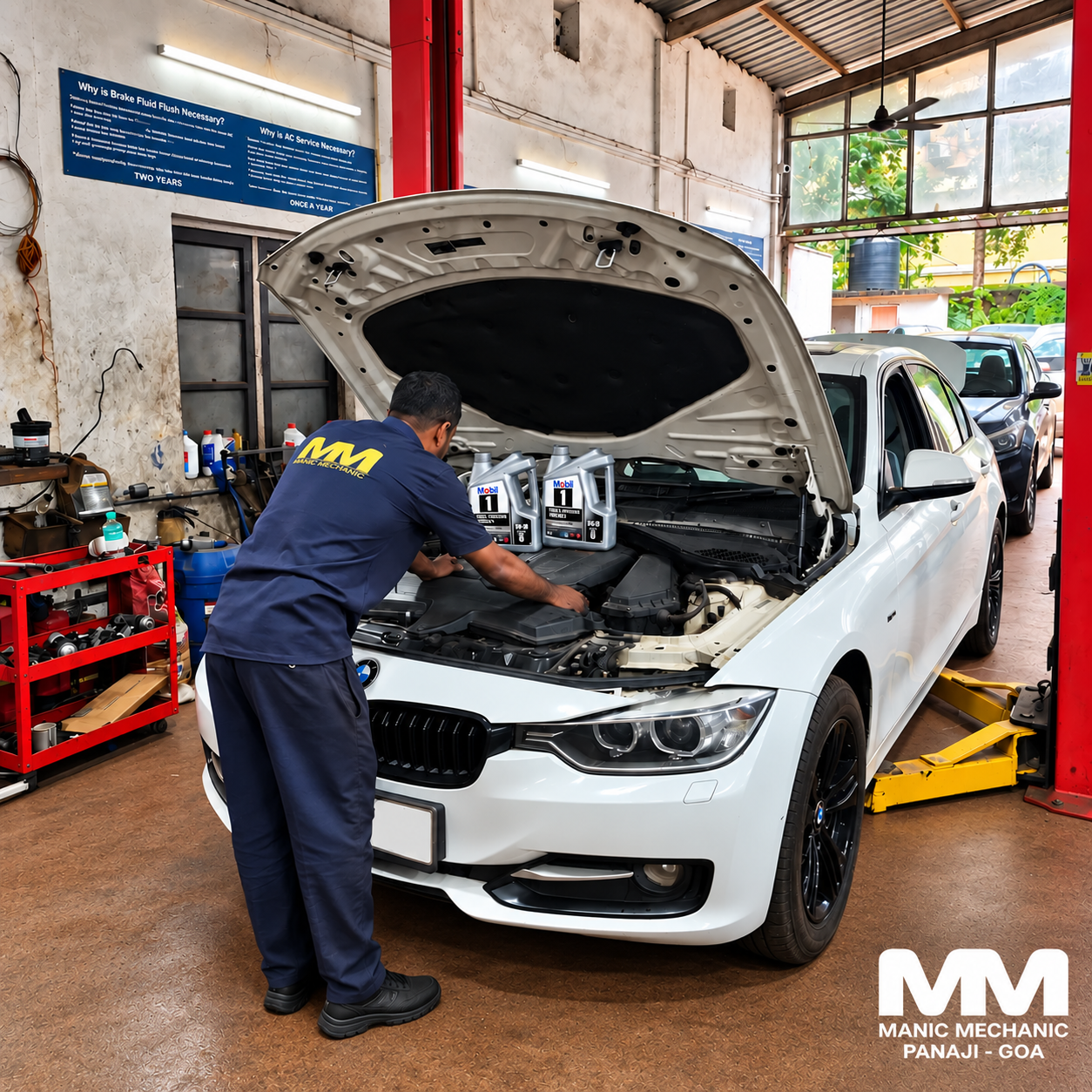
BMW 3 Series receiving an annual service at Manic Mechanic Goa

01 / ENGINE CARE

Low Kilometres? Your Car May Still Be Due for a Service

Engine oil changes depend on time as well as distance. Even if your vehicle hasn’t reached the recommended kilometres, it can still be due for servicing when the manufacturer’s time limit is reached.

Why does low-mileage driving still affect the oil?
Frequent short trips may stop the engine from reaching its full operating temperature for long enough to remove accumulated moisture. Fuel dilution and combustion contaminants can also affect the oil. Meanwhile, idling adds engine running time without adding kilometres to the odometer.

As oil deteriorates, its ability to lubricate, clean and protect engine components can decline. Fresh oil of the correct specification helps maintain that protection.

Why replace the oil filter too?
The oil filter captures particles circulating through the engine. Replacing it with the oil, as specified in the service schedule, removes the loaded filter and supports effective filtration of the fresh oil.

What about air, fuel and AC cabin filters?
These filters have their own maintenance requirements. Dust, debris and operating conditions can affect them even on a low-mileage vehicle. They should be inspected and replaced according to their condition and the manufacturer’s schedule—every filter does not automatically need replacing at every oil change.

Follow the recommended time or kilometre interval, whichever comes first, along with any oil-life alerts and special operating-condition guidance for your vehicle.

At Manic Mechanic, Panaji, Goa, we assess your car’s service history, usage and filter condition to recommend the maintenance it needs.

EXPLORE ANNUAL SERVICING →
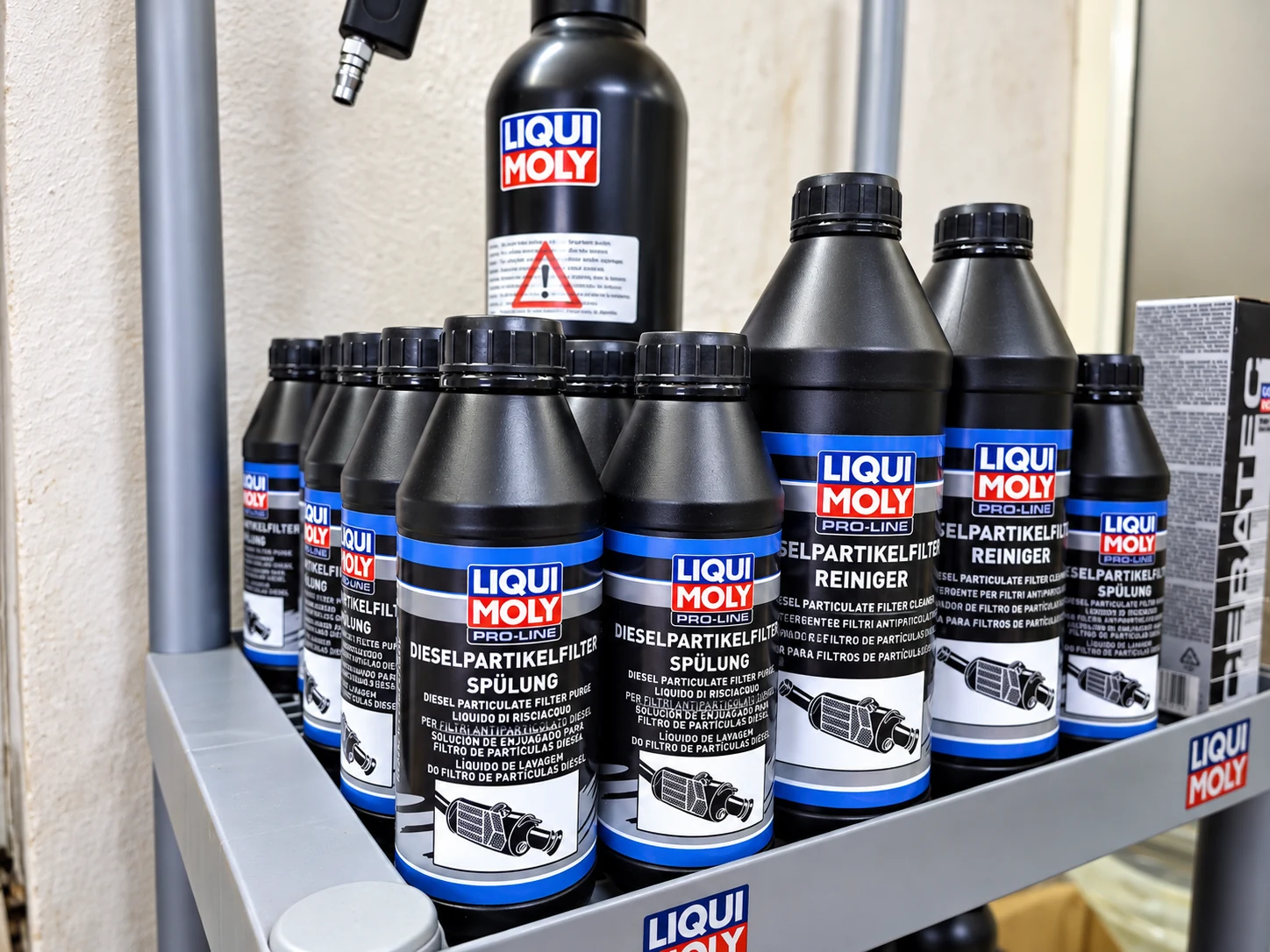
DPF cleaning work at Manic Mechanic Goa

02 / DIESEL SYSTEMS

What does a DPF warning mean?

A diesel particulate filter traps soot from the exhaust. A warning can indicate that regeneration has not completed or that another fault is affecting the system. The right next step is a diagnosis, not a guess based on the dashboard light alone.

Our team checks the fault and the filter’s condition before recommending cleaning or repair. A clogged or damaged filter may need a different solution, and any underlying cause should be addressed.

EXPLORE DPF CLEANING →
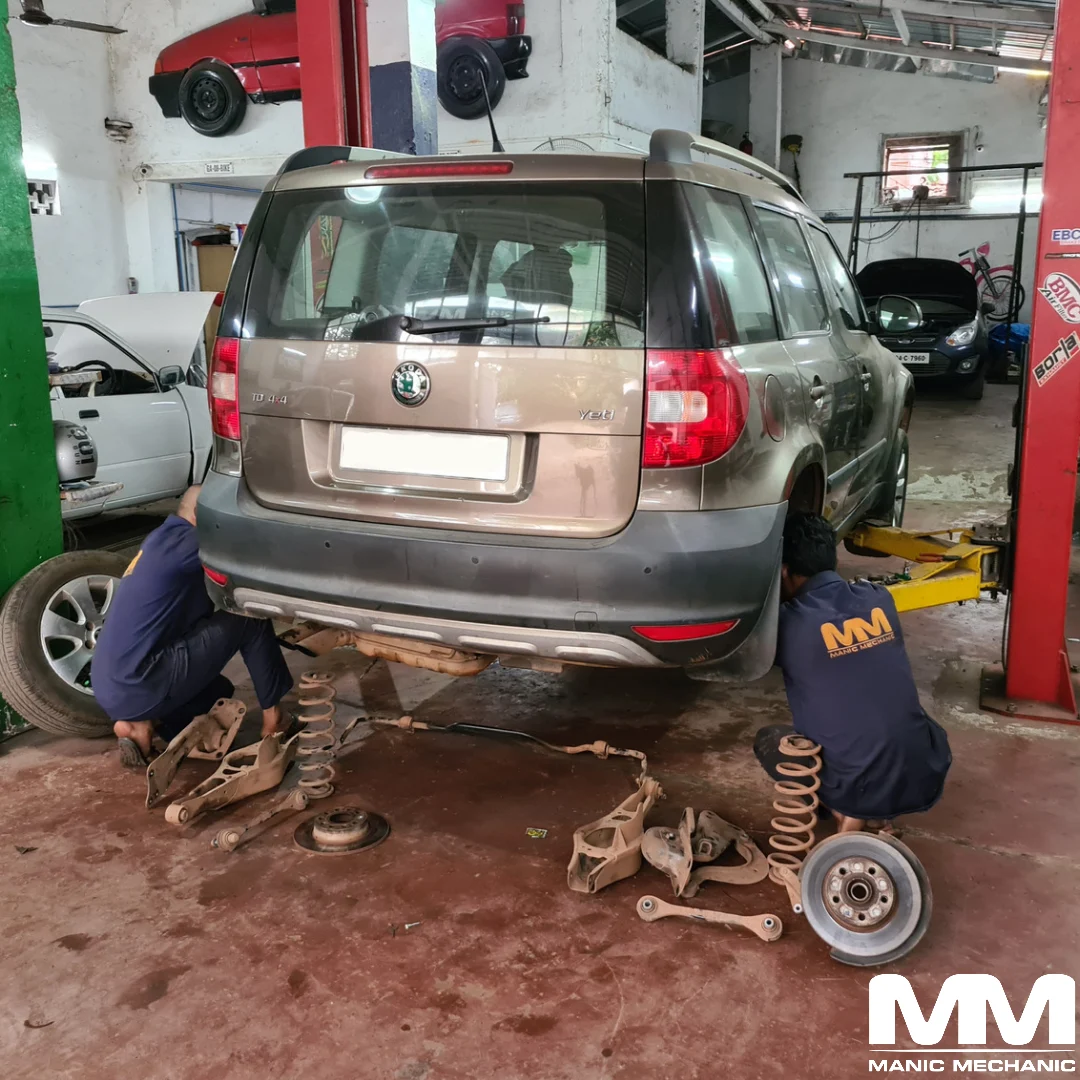
Rear suspension inspection at the Manic Mechanic workshop

03 / TYRES & SUSPENSION

Why check uneven tyre wear?

Uneven wear is a clue that deserves attention before fitting another set of tyres. Tyre pressure, wheel alignment and worn suspension parts are among the things a technician may need to check.

Check tyre pressures when the tyres are cold and use the pressure specified for your vehicle. If the tread wears unevenly or the car pulls to one side, book an inspection so the cause can be found.

EXPLORE MANIC TYRES →
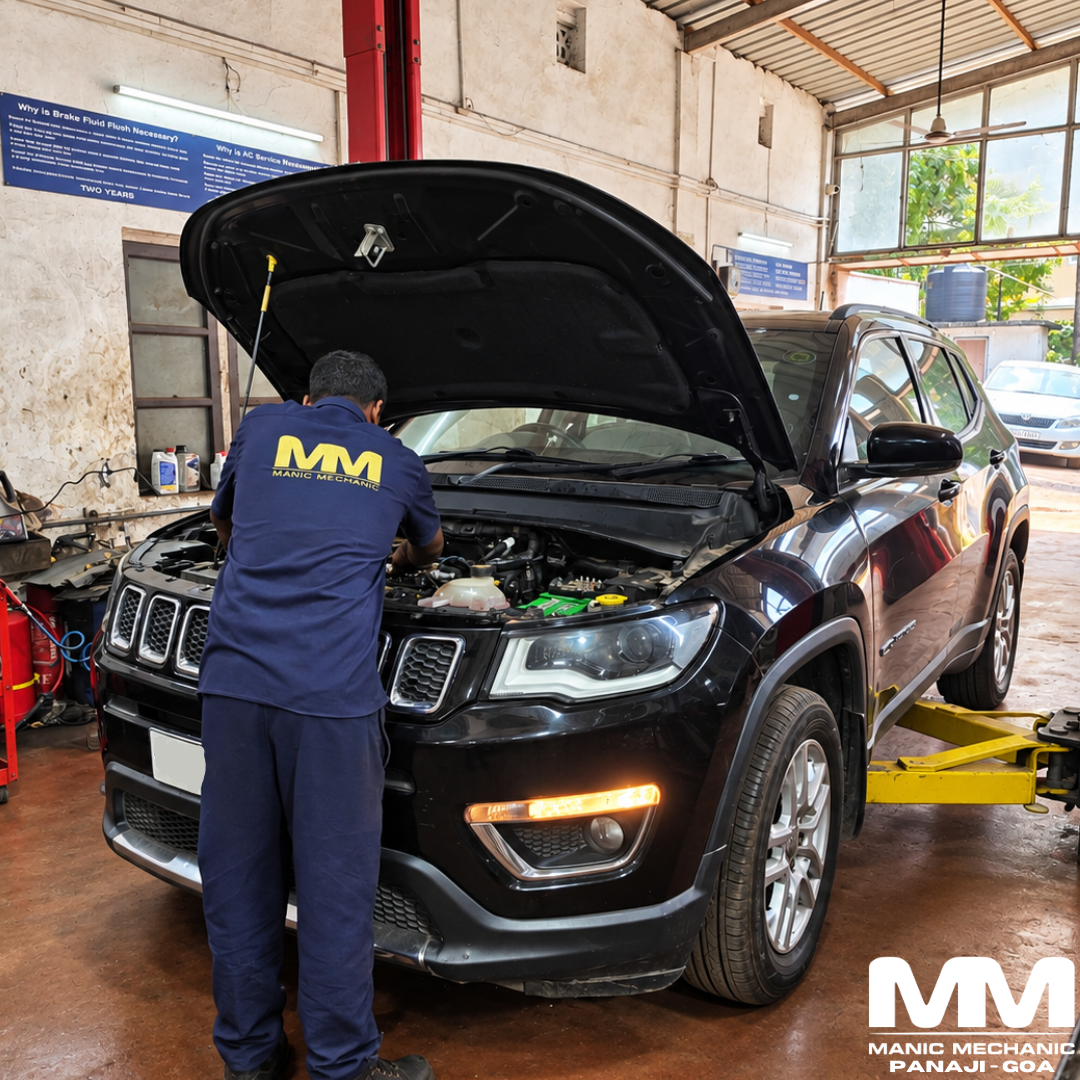
Technician working on a Jeep Compass at Manic Mechanic in Panaji, Goa

04 / EGR SYSTEM CARE

EGR Cleaning: Why It Matters

Your vehicle’s Exhaust Gas Recirculation (EGR) system helps reduce harmful nitrogen oxide emissions by returning a controlled amount of exhaust gas to the engine. Over time, soot and carbon deposits can build up inside the valve and passages, restricting flow or causing the valve to stick.

When carbon buildup is the cause, professional EGR cleaning can help restore smoother idling, better engine response and lost performance. It may also avoid unnecessary replacement of an otherwise serviceable EGR assembly.

Signs that warrant inspection include:

  • Rough idling or hesitation.
  • Reduced power or sluggish acceleration.
  • An illuminated engine warning light.

These symptoms can have several causes, so accurate diagnosis comes first. Cleaning is recommended based on the system’s condition and your vehicle manufacturer’s guidance; it cannot repair damaged components or failed electronics.

At Manic Mechanic, Panaji, Goa, we inspect and diagnose the EGR system before recommending cleaning or replacement—helping you choose the right repair for your car.

EXPLORE MECHANICAL & ELECTRICAL REPAIRS →
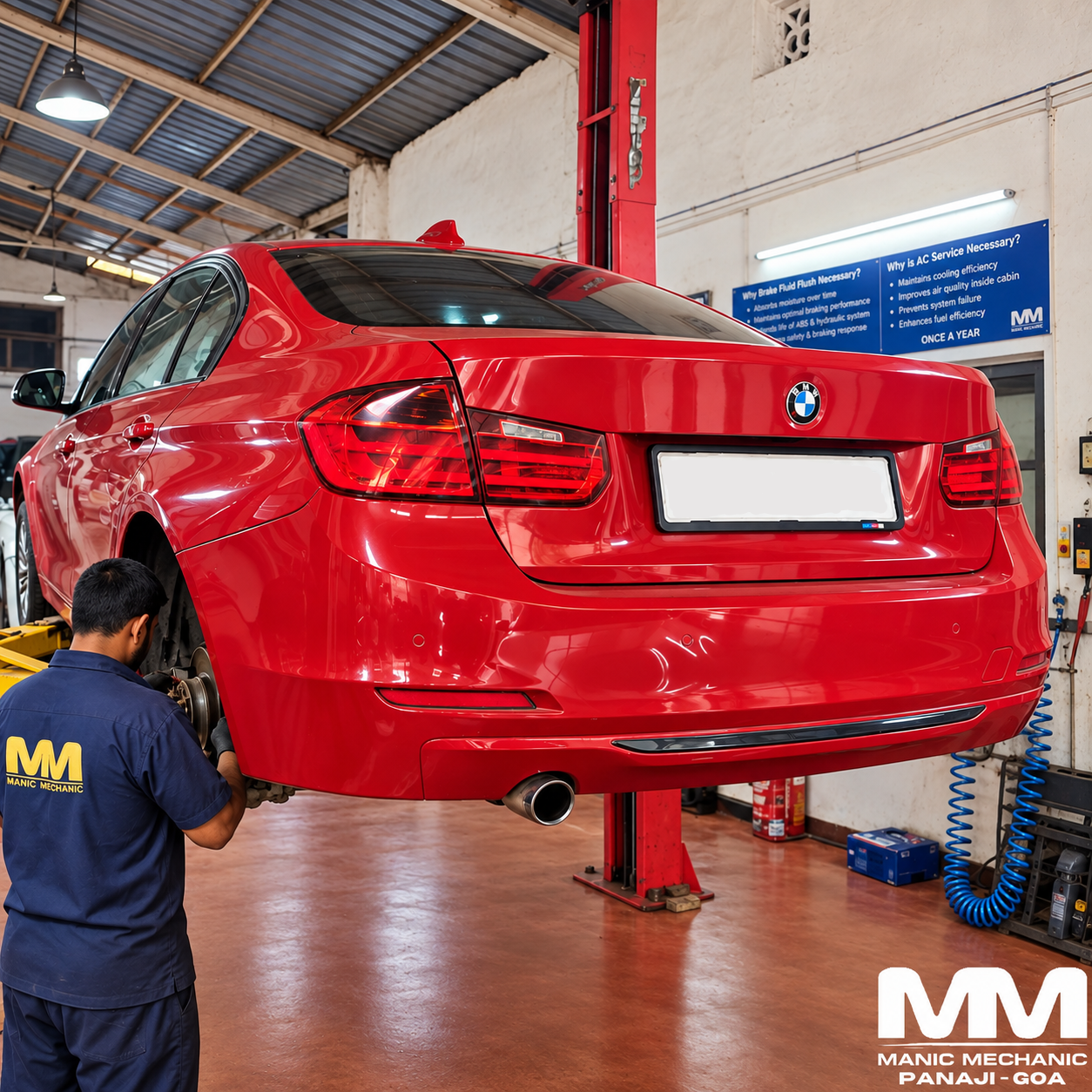
BMW receiving brake maintenance at Manic Mechanic in Panaji, Goa

05 / BRAKE SYSTEM CARE

Brake Fluid Flush: Small Maintenance, Major Importance

Brake fluid transfers pressure from your brake pedal to the brakes at each wheel. Even when your brake pads and discs are in good condition, the fluid needs periodic replacement.

Why does brake fluid deteriorate?
Most cars use glycol-based brake fluid, which absorbs moisture over time—even when the vehicle is driven infrequently. This moisture lowers its boiling point. Under heavy or repeated braking, the fluid can boil and form vapour bubbles, causing a soft pedal and reduced braking effectiveness.

Why is a complete fluid replacement important?

  • Removes old fluid and absorbed moisture.
  • Restores the fluid’s ability to withstand braking heat.
  • Helps protect internal brake components against corrosion.
  • Supports reliable operation of the hydraulic braking system.

Topping up is not the same as flushing. Adding fluid to the reservoir does not remove aged fluid from the brake lines and calipers. A proper replacement exchanges the old fluid and bleeds the system using the vehicle’s specified procedure.

When should it be replaced?
Every two years is a common recommendation, but always follow your vehicle manufacturer’s interval and required fluid specification. Don’t wait for a change in pedal feel before having it checked.

At Manic Mechanic, Panaji, Goa, we use the correct brake fluid specification and replacement procedure to help keep your braking system ready for the road.

BOOK / REQUEST A QUOTE →
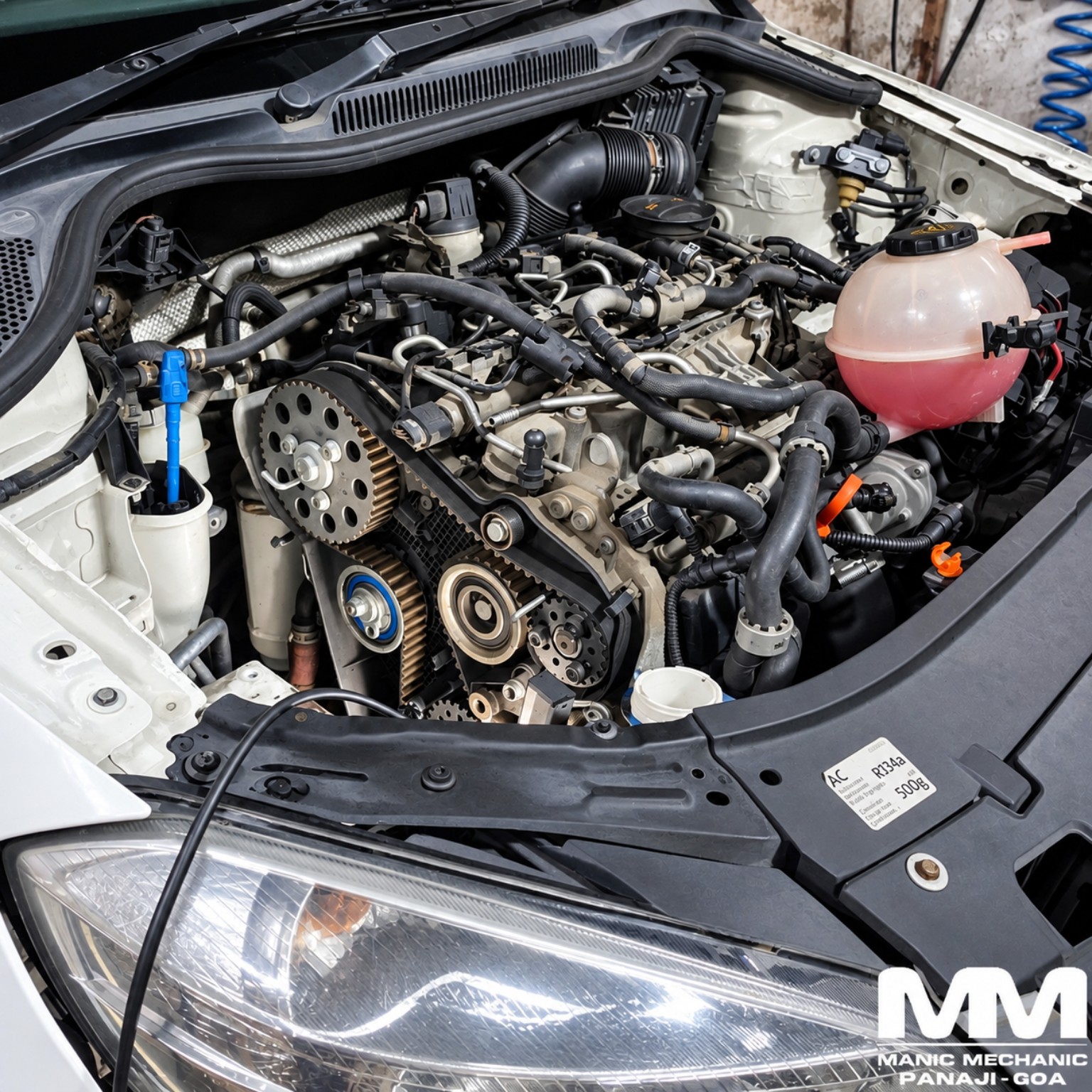
Engine timing belt components exposed during workshop maintenance

06 / TIMING SYSTEM CARE

Timing Kit & Water Pump: Replace on Schedule, Protect Your Engine

The timing belt keeps the crankshaft and camshaft synchronised so the engine’s valves open and close at the correct moment. The belt, tensioner and idler pulleys work together—and wear in any one component can compromise the system.

Why follow the replacement interval?
Timing belts deteriorate through age, heat and use. A vehicle may still run normally even when replacement is due. If the belt breaks or slips, many engines can suffer valve and piston damage, leading to an expensive engine repair.

Follow the manufacturer’s specified kilometre and time limits, where applicable, whichever comes first. The interval depends on the engine; timing-chain systems have different maintenance requirements.

Why replace the complete kit?
A new belt cannot compensate for worn tensioners or pulley bearings. Replacing the specified components together helps maintain correct tension and reduces the risk of an old component damaging the new belt.

Why include the water pump?
The water pump circulates coolant to control engine temperature. Where it is driven by the timing belt, a leaking or seized pump can put the timing system at risk. Replacing it during the timing-kit service, as recommended for the engine, also avoids repeating much of the dismantling work later.

Why are OEM parts critical?
Timing components need precise fit, correct belt construction, reliable bearings and suitable seals. Genuine parts or verified, correctly specified components from reputable original-equipment manufacturers help maintain the required quality and compatibility. An “OEM” label alone is not enough—authenticity, the correct part number and a trusted source matter.

Quality parts must also be fitted using the correct timing tools, tension settings, torque specifications and coolant. Even the best kit depends on proper installation.

At Manic Mechanic, Panaji, Goa, we check your engine’s service requirements and recommend correctly specified timing components and water pumps to help prevent avoidable engine damage.

EXPLORE MECHANICAL & ELECTRICAL REPAIRS →
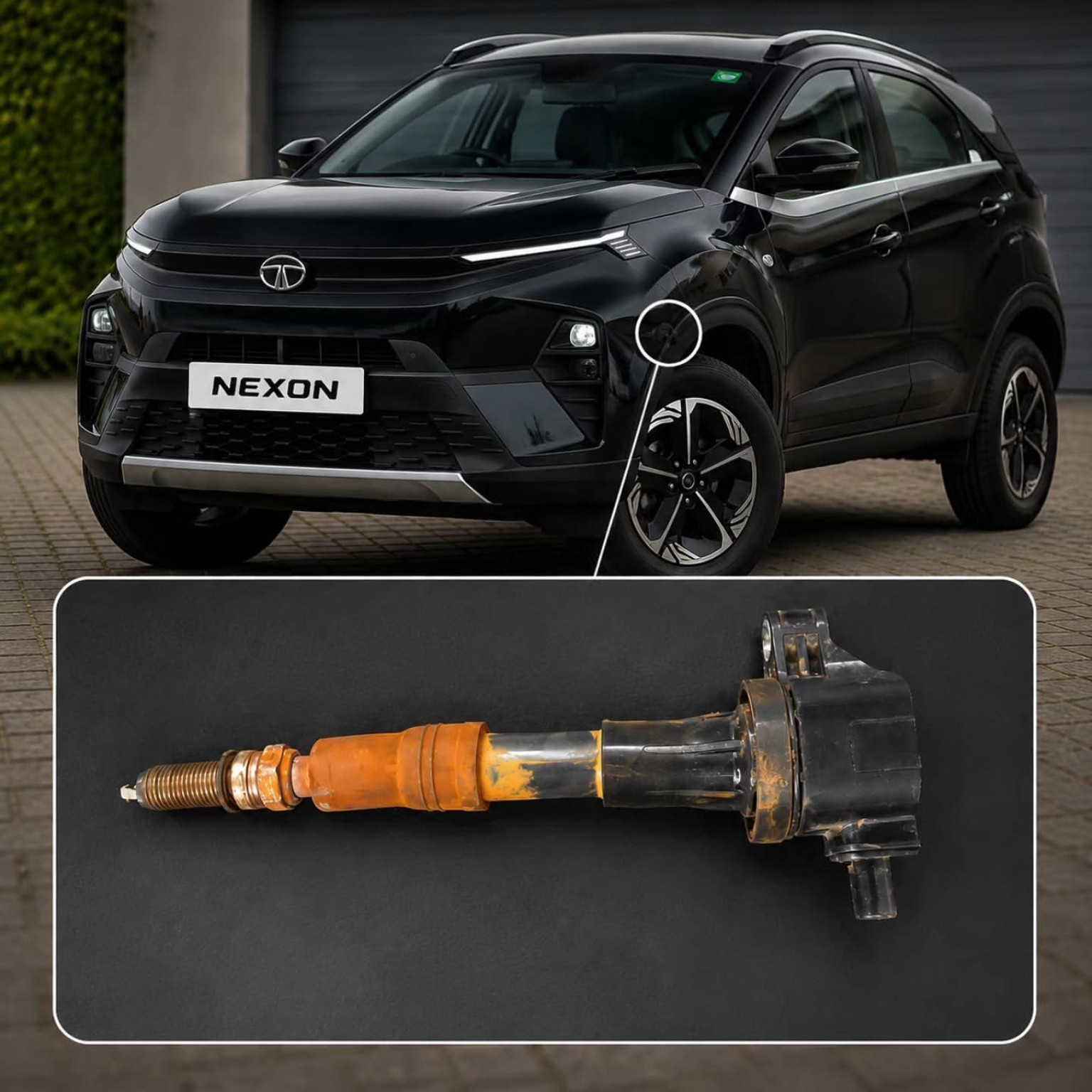
Tata Nexon illustration with a corroded ignition coil and spark plug

07 / ELECTRICAL & IGNITION CARE

Engine Bay Washing: A Clean Look Can Hide Costly Problems

Your engine bay contains ignition components, sensors, wiring and electronic modules. Careless washing—especially with high-pressure water—can force moisture into areas designed to resist normal splashes, rather than direct jets.

How can water affect your car?

Ignition coils and spark plug wells: Trapped water can cause corrosion and electrical leakage, leading to misfires, rough idling, hesitation and loss of power.

Connectors and sensors: Moisture can disrupt electrical signals or corrode terminals, causing warning lights and intermittent faults.

Fuse boxes and electronic modules: Water ingress can damage circuits and affect starting or normal vehicle operation.

Air intake: Water entering the intake can damage the engine if enough reaches the cylinders.

Problems may appear immediately after washing or develop later as trapped moisture causes corrosion. Simply drying the visible surfaces does not guarantee that concealed connectors and plug wells are dry.

How should an engine bay be cleaned?
Follow the vehicle manufacturer’s instructions. Controlled cleaning with suitable products, brushes and cloths helps limit water exposure. Protect sensitive components, avoid spraying ignition parts and electrical assemblies, and never wash a hot or running engine.

If your car develops rough running, starting difficulties or warning lights after an engine wash, arrange an inspection promptly. Avoid continuing to drive with severe misfiring.

At Manic Mechanic, Panaji, Goa, we inspect for water ingress and diagnose affected components before recommending repairs—helping prevent a cosmetic clean-up from becoming an expensive breakdown.

EXPLORE MECHANICAL & ELECTRICAL REPAIRS →

HAVE A QUESTION?

Ask the workshop
about your car.

Share the model, symptoms and any warning lights with us. We’ll advise on the appropriate inspection.